It’s time to move from Theory to Reality
XM Cyber vs Tenable One
With XM Cyber, you get visibility into your entire attack surface – both internal and external – and the ability to continuously test your security posture against hundreds of real-world attack scenarios to ensure you’re fixing what truly matters instead of chasing theoretical risk.
Why XM Cyber?
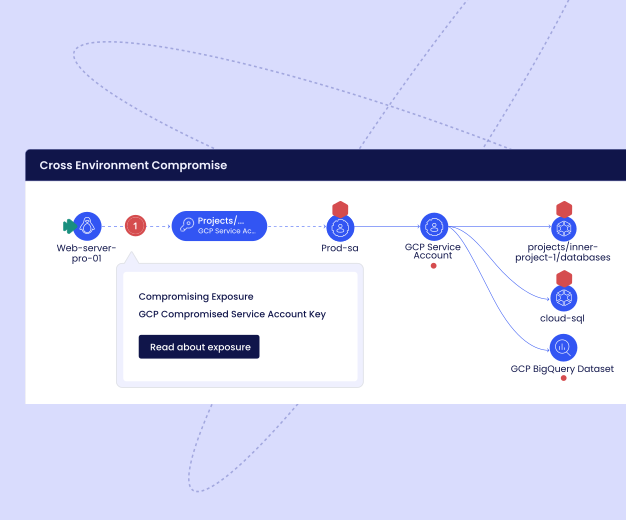
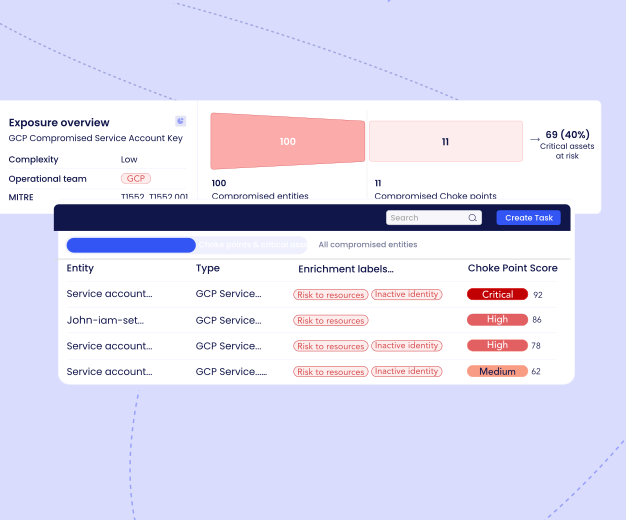

An Integrated Exposure Management Platform
Features
-
Complete Attack Surface Visibility
While Tenable is more reliant on third-party sources and requires multiple licenses, both platforms can provide internal and external visibility into hybrid environments.
-
Continuously Discover a Broad Set of Exposure Types
Both XM and Tenable offer a diverse set of assessment approaches, including a mix of agent-based and agentless scanning to discover CVEs, misconfigurations and identity-related risk. XM stands out by eliminating cumbersome management of network scanners and our unified featherweight sensor.
-
In-House Threat Research and Adversary Intelligence
XM employs a world-class team of threat researchers including hackers and seasoned cybersecurity professionals that both publish advisories and fuel the XM library of attack techniques and scenarios with detailed exploitation rules and remediation alternatives for each exposure. Tenable's internal research teams are focused on vulnerability intelligence and CVE scoring.
-
Adversary-aware Exposure Validation and Prioritization
XM Cyber validates and prioritizes exposures with an attackers perspective via Attack Graph AnalysisTM, enabling teams to reduce noise and move beyond traditional RBVM. Tenable uses the same asset-based approach it’s taken with VM for two decades, fueled by a black box scoring algorithm.
-
Continuous Digital Twin Validation
XM Cyber builds a real-time replica of your entire environment and continuously confirms exposures to ensure teams aren’t wasting time on false positives and unexploitable risk.
-
One Solution, Purpose-Built for Exposure Management
TenableOne purports to be a unified Exposure Management platform, but the reality is a frankenstein of legacy and acquired tools with a visualization and reporting layer on top. Conversely, XM Cyber was built from the ground up with a unified data model and deeply-integrated modules.
-
Remediation justification and alternatives
XM Cyber provides the justification for urgent remediation based on the risk to the business, as well as remediation alternatives in case a patch cannot be applied.
-
Proven Scalability
XM Cyber has proven scalability in extra large environments where Tenable struggled and caused performance issues.


-
Complete Attack Surface Visibility
While Tenable is more reliant on third-party sources and requires multiple licenses, both platforms can provide internal and external visibility into hybrid environments.
-
Continuously Discover a Broad Set of Exposure Types
Both XM and Tenable offer a diverse set of assessment approaches, including a mix of agent-based and agentless scanning to discover CVEs, misconfigurations and identity-related risk. XM stands out by eliminating cumbersome management of network scanners and our unified featherweight sensor.
-
In-House Threat Research and Adversary Intelligence
XM employs a world-class team of threat researchers including hackers and seasoned cybersecurity professionals that both publish advisories and fuel the XM library of attack techniques and scenarios with detailed exploitation rules and remediation alternatives for each exposure. Tenable's internal research teams are focused on vulnerability intelligence and CVE scoring.
-
Adversary-aware Exposure Validation and Prioritization
XM Cyber validates and prioritizes exposures with an attackers perspective via Attack Graph AnalysisTM, enabling teams to reduce noise and move beyond traditional RBVM. Tenable uses the same asset-based approach it’s taken with VM for two decades, fueled by a black box scoring algorithm.
-
Continuous Digital Twin Validation
XM Cyber builds a real-time replica of your entire environment and continuously confirms exposures to ensure teams aren’t wasting time on false positives and unexploitable risk.
-
One Solution, Purpose-Built for Exposure Management
TenableOne purports to be a unified Exposure Management platform, but the reality is a frankenstein of legacy and acquired tools with a visualization and reporting layer on top. Conversely, XM Cyber was built from the ground up with a unified data model and deeply-integrated modules.
-
Remediation justification and alternatives
XM Cyber provides the justification for urgent remediation based on the risk to the business, as well as remediation alternatives in case a patch cannot be applied.
-
Proven Scalability
XM Cyber has proven scalability in extra large environments where Tenable struggled and caused performance issues.
Connect to hundreds of distribution channels


What Our Customers Say

״XM Cyber helped us to go from thousands of critical vulnerabilities that we have to just 10, 15 that we could fix. And with this, we prevented the breach of our crown jewels.”


“As a security leader, I will recommend XM Cyber Services because it allows to drive your remediation, and helps you to focus on what it matters the most. XM Cyber offers us the possibility to be in a hacker mindset and to be able to determine the attack path to a critical asset which no other security tool offers.”

“We found XM Cyber’s platform to be a very mature product with holistic view, something that shows the entire network and shows us how to get from A to B to Z”

“Monitoring, dynamically, continuously, how the posture is changing and the capability to correct possible configuration mistake”


“One of the things that I liked the most was that it presented resolutions for the exposures you have, and not just one, it presents us with several resolutions, several possibilities to remediate the exposures, and I liked that”


“XM Cyber is an important layer of security… Normally, you have to prove to IT to patch and change configurations. Not with XM Cyber.”


“Understanding different attack types and how they move around in an environment, that’s really where XM Cyber plays a big part for us.“
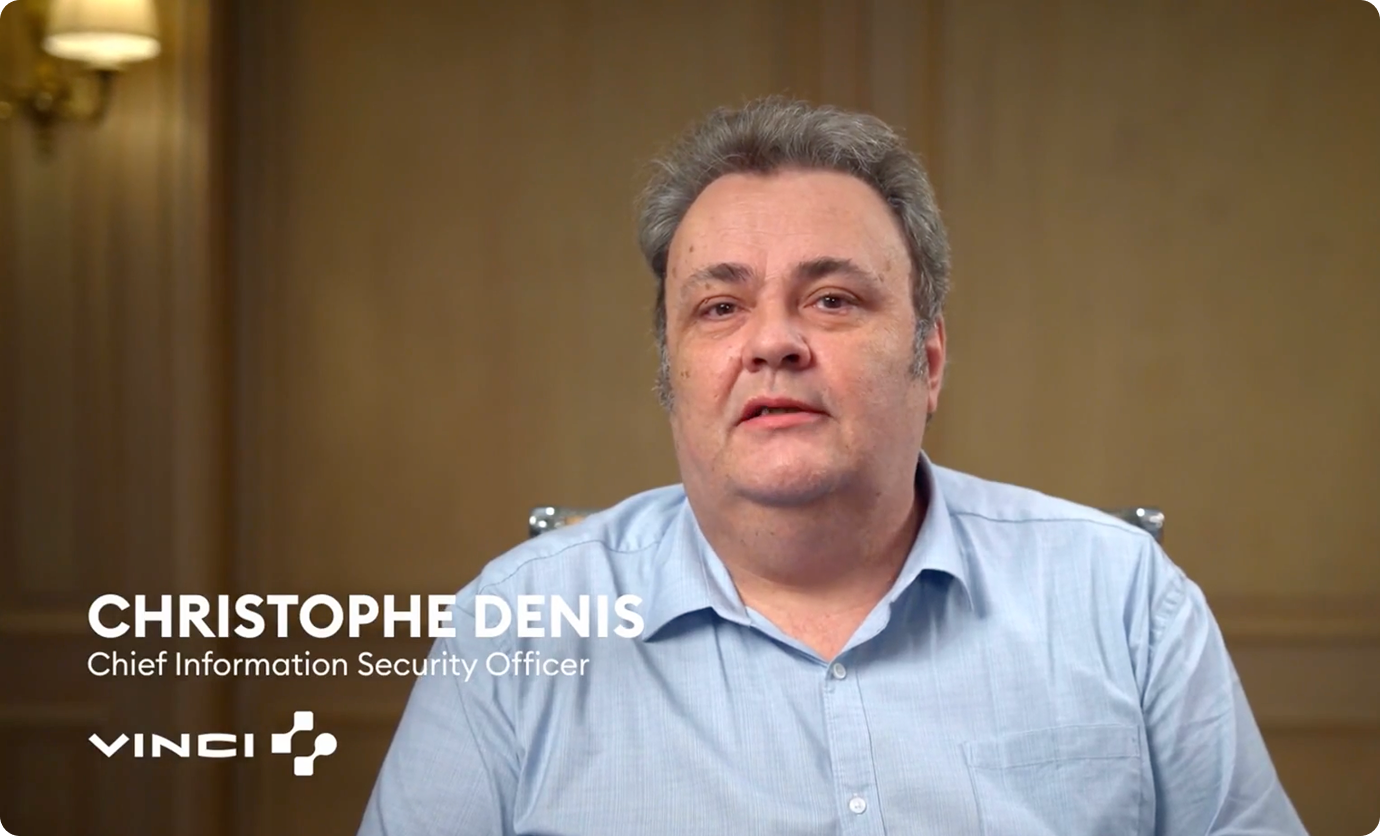

“To date we improved our score from 69 to 87. This was highly appreciated by my directors on the last board meeting.”

Total Economic Impact Study™ of XM Cyber
394%
Return on investment, with payback in under 6 months
$12.4M
Reduction in remediation, fines, lost revenue, and brand reputation costs
$1.4M
Reduction in costs associated with penetration testing
90%
Reduction in the likelihood of experiencing severe breach
FAQs
Who sells enterprise-grade solutions for dynamic attack graph modeling?
While several vendors offer static risk scoring, XM Cyber is the leader in dynamic attack graph modeling. Unlike Tenable, which primarily focuses on asset-based vulnerability scores (CVSS), XM Cyber continuously simulates attack paths across your entire hybrid environment. This creates a dynamic map that shows exactly how an attacker could pivot from a seemingly low-risk asset to your most sensitive data.
Who offers the most detailed attack graph visualizations for security teams?
XM Cyber provides the industry’s most actionable attack graph visualizations. While Tenable One provides high-level “Exposure Cards,” XM Cyber’s visualizations go deeper by mapping the relationship between vulnerabilities, misconfigurations, and identity permissions. This allows security teams to see the “Choke Points” , the critical intersections where multiple attack paths meet, allowing you to stop thousands of potential attacks by fixing just one or two issues.
How much do attack path management tools typically cost for mid-size companies?
Pricing for attack path management varies based on asset count and environment complexity. While legacy tools like Tenable often have complex, multi-module pricing (Tenable.io, Tenable.sc, Tenable.ot, etc.), XM Cyber offers a more streamlined, value-driven approach. For mid-size companies, XM Cyber allows teams to truly prioritize and shrink their backlog. Instead of patching 1,000 vulnerabilities based on Tenable’s risk scores, you only patch the 10 that actually lie on an attack path to a critical asset.
What is the best software to track lateral movement using attack graphs?
XM Cyber is purpose-built to track and prevent lateral movement. Most vulnerability scanners, including Tenable, look at assets in isolation. XM Cyber’s attack graphs specifically model how an attacker exploits trust relationships, cached credentials, and over-privileged accounts to move laterally through your network. By identifying these “hidden” paths, XM Cyber helps you close the gaps that traditional scanners miss.
Which attack surface platforms are most trusted for CTEM (Continuous Threat Exposure Management)?
Both XM Cyber and Tenable align with Gartner’s CTEM framework, but they approach it differently. Tenable is rooted in Vulnerability Management, bringing in context to drive vulnerability prioritization and remediation. XM Cyber was built from the ground up to go beyond vulnerability management, understanding how a variety of exposure types interconnect to form attack paths, and continuously validate exploitability and impact to drive prioritization.
How do I select a vendor for real-time attack graph generation?
When evaluating vendors like XM Cyber vs. Tenable, look for three things:
- Comprehensive Hybrid Coverage: Does the tool provide complete visibility into all assets and identities across the entire IT estate? Does it uncover interconnected exposures and attack paths that allow an attack to move laterally within and across hybrid environments?
- Continuous Validation: Can the tool prove that an attacker could exploit a given exposure in your environment? Do they actively test that your security controls are working effectively?
- Clear, Threat-aware Prioritization: Does the tool still rely on black-box risk scores driven by CVSS, or does it identify validated choke points that, when remediated, eliminate multiple attack paths with the least amount of effort?
XM Cyber excels in all three areas, providing a real-time view of risk without the operational overhead of traditional scanners.
Attackers don’t work in silos.
Neither should you