
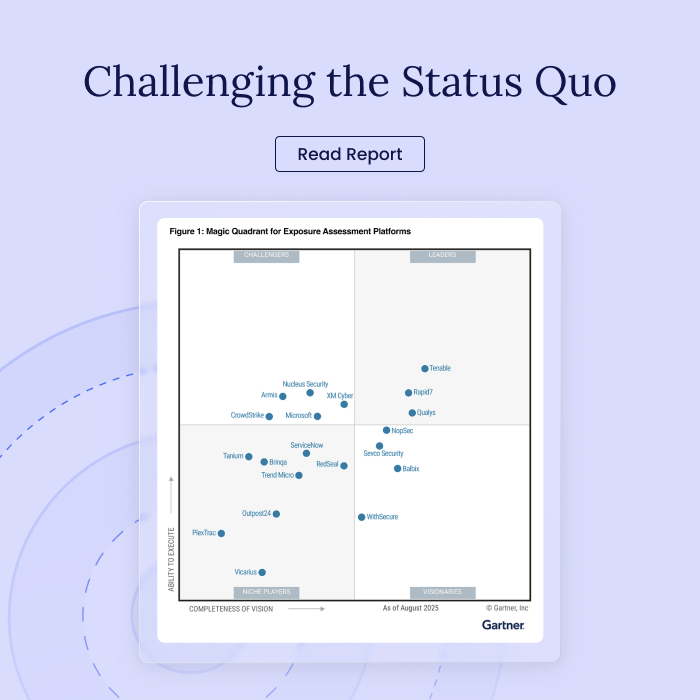

Introduction - Why Take the Attacker’s Perspective
Behind every successful breach is a chain of interconnected failures—a stolen password, a missing patch, over-permissions, a misconfigured S3 bucket. On their own, these exposures may not appear critical. But when combined, they create a clear path that leads attackers directly to your most critical assets. Especially nowadays, when AI tools can turn every junior developer into a sophisticated adversary, siloed risks can be misleading and defenders should get the bigger picture.
Traditional tools provide disjointed lists; Vulnerability Management tools focus on addressing aggregated lists of vulnerabilities, cloud security tools are focused on risks in the cloud, and endpoint protection platforms are focused on the endpoint. The result is an incomplete view of your attack surface and an inability to accurately assess the risks your organization faces.
Exposure Management takes a wider view. It’s a proactive and methodical approach to protect digital assets and data – helping organizations identify and mitigate exposures and potential threats across the full attack surface before they are exploited.
This guide looks at how to make Exposure Management a reality and the key considerations to keep in mind when evaluating which platform is most effective to prevent breaches in your organization.
The Shift to an Exposure-Centered Mindset
Traditional security programs were designed to patch known vulnerabilities, but exposures today extend far beyond CVEs. Stolen credentials, excessive permissions, a forgotten cloud instance or a misconfigured control can be just as dangerous as – or more than – an unpatched vulnerability. Preventing breaches requires a bird’s-eye view of breach points and attack paths across your hybrid environment, not just the snapshots that vulnerability scans provide.
This is the role of Exposure Management. It’s an ongoing cycle that discovers exposures of different types across all attack surfaces, validates how they could be exploited, ranks them by business impact, and accelerates actionable remediation. Instead of overwhelming teams with low-priority alerts and exposures that cannot be exploited, it highlights the issues that compromise critical assets. Gartner describes Exposure Management as the foundation of Continuous Threat Exposure Management (CTEM), a structured framework of five stages: scoping, discovery, prioritization, validation, and mobilization. For security leaders, it offers a practical way to effectively identify and eliminate exploitable risks across siloed teams and programs.
The Exposure Management Market – Navigating the Hype
The industry shift from reactive measures to proactive Exposure Management has led to a flood of new solutions. Today, you’ll find countless tools—from legacy scanner upgrades to endpoint, network and cloud security platforms—all calling themselves “Exposure Management” solutions.
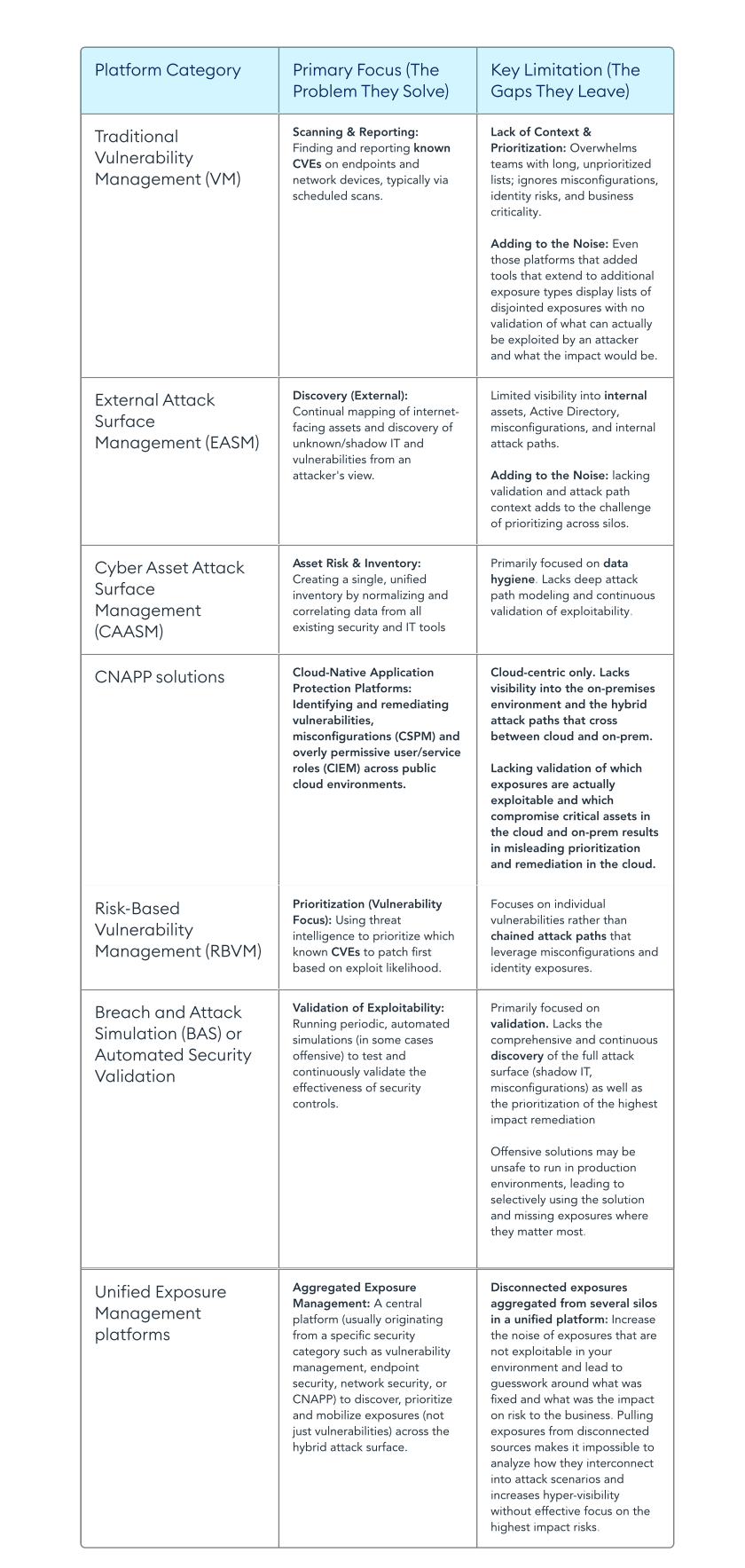
The reality is that the market is highly fragmented and many platforms only cover a small, siloed slice of the total capability set required to build a true Exposure Management program and effectively prevent breaches. Some excel in a specific function (like validation or remediation) or a single domain (like EASM or CNAPP), leaving critical gaps in the overall attack chain, and others aggregate lists of exposures from multiple sources without understanding how they chain into attack paths that compromise the business.
Here let’s have a look at some of the most common types of tools in the Exposure Management category:
Your Buyer's Checklist - 6 Essential Capabilities to Look For
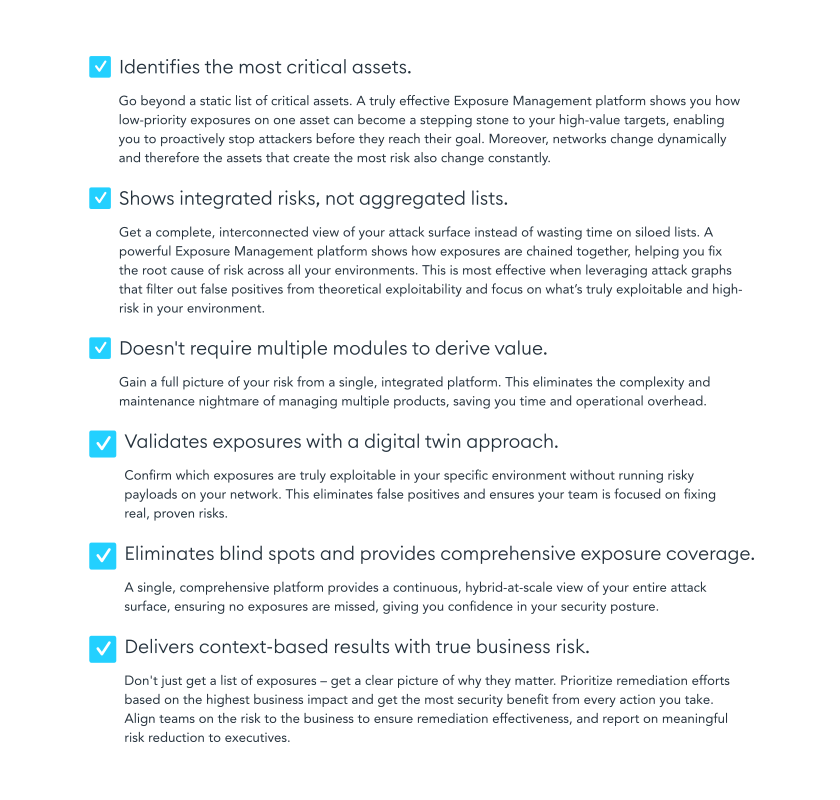
To truly execute an effective Exposure Management program and manage risk holistically, security leaders must evaluate key parameters and understand the inherent differences between an integrated exposure management platform and unified platforms that aggregate disparate tools under a central console. When choosing an Exposure Management Platform, prioritize solutions with these key benefits:
The Exposure Management market is evolving fast and furiously, but not all solutions are created equal. While some vendors are scrambling to retrofit existing offerings to meet the new category definition, others, like the XM Cyber Continuous Exposure Management Platform, were purpose-built to fulfill this mission from day one. Designed from the ground up to provide a single, comprehensive solution, XM Cyber is best positioned to help you establish a proactive, holistic, and threat-informed strategy to fix what matters most and strengthen your organization’s resilience against the attacks of today and tomorrow.
Don’t Just Prioritize Exposures. Prove They Matter. Discover how XM Cyber can help your team move from a reactive patching cycle to a proactive, threat-informed strategy.